One shape. No compromise.
We preserve what made the E-Type timeless and refine what time has changed.
Its proportions remain unmistakable. Its stance is sharper. Its character is more purposeful.
A familiar silhouette, interpreted for today.
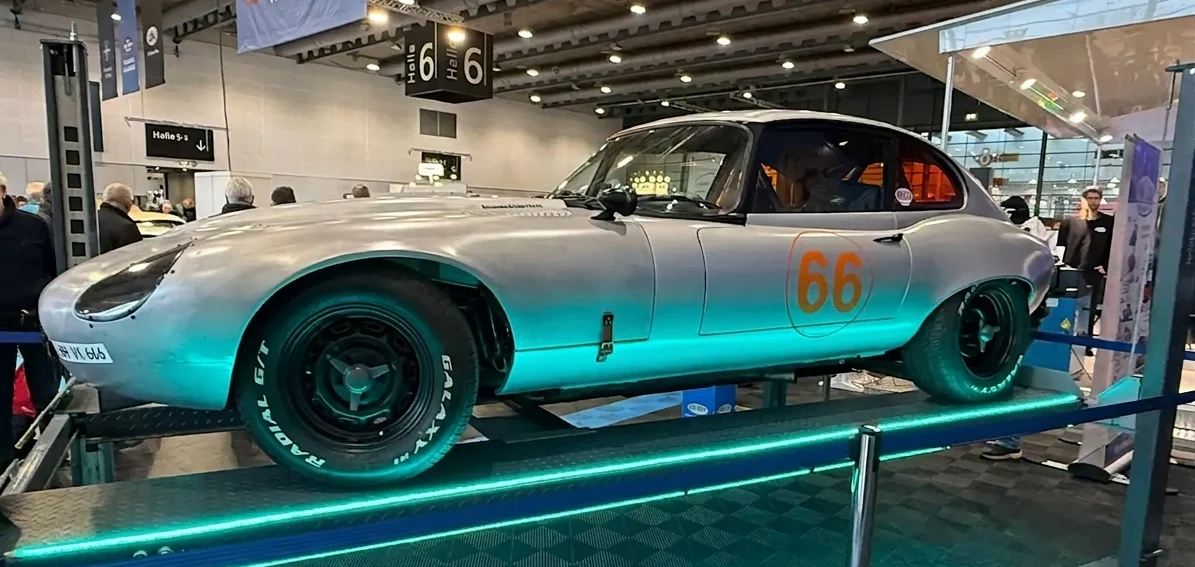
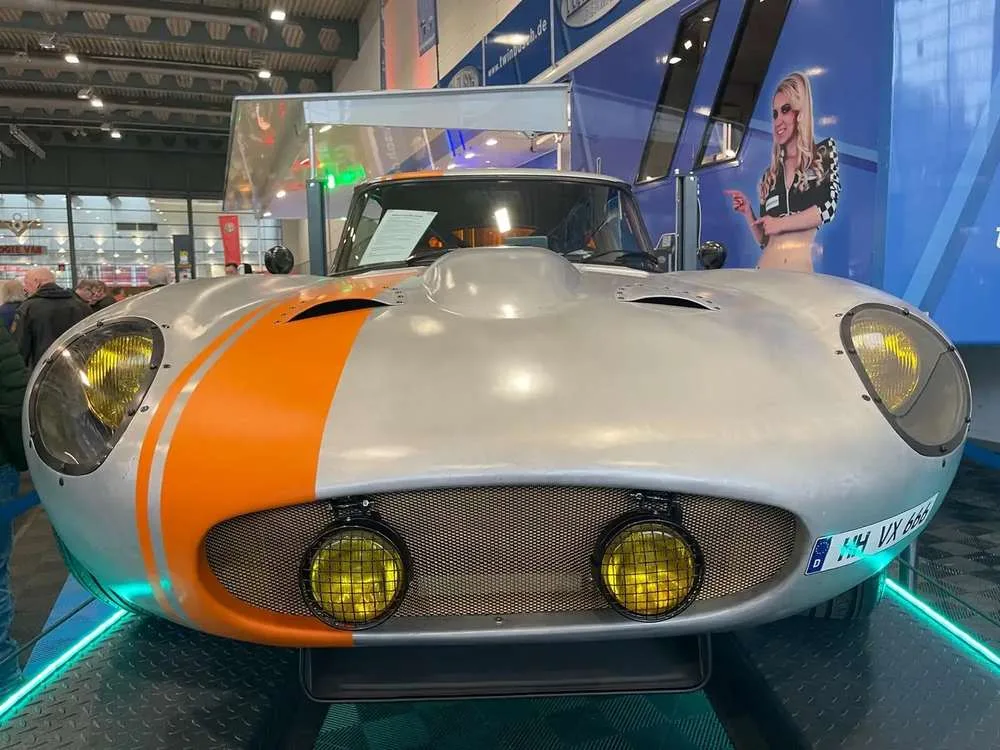
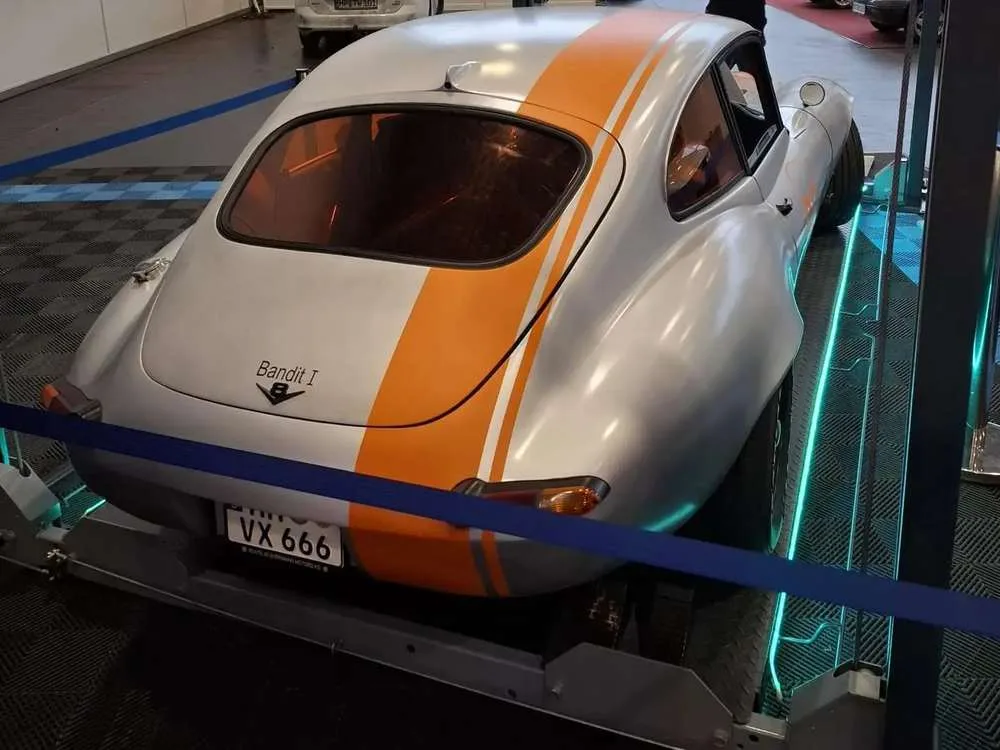
Bandit I — the first Borrmann.
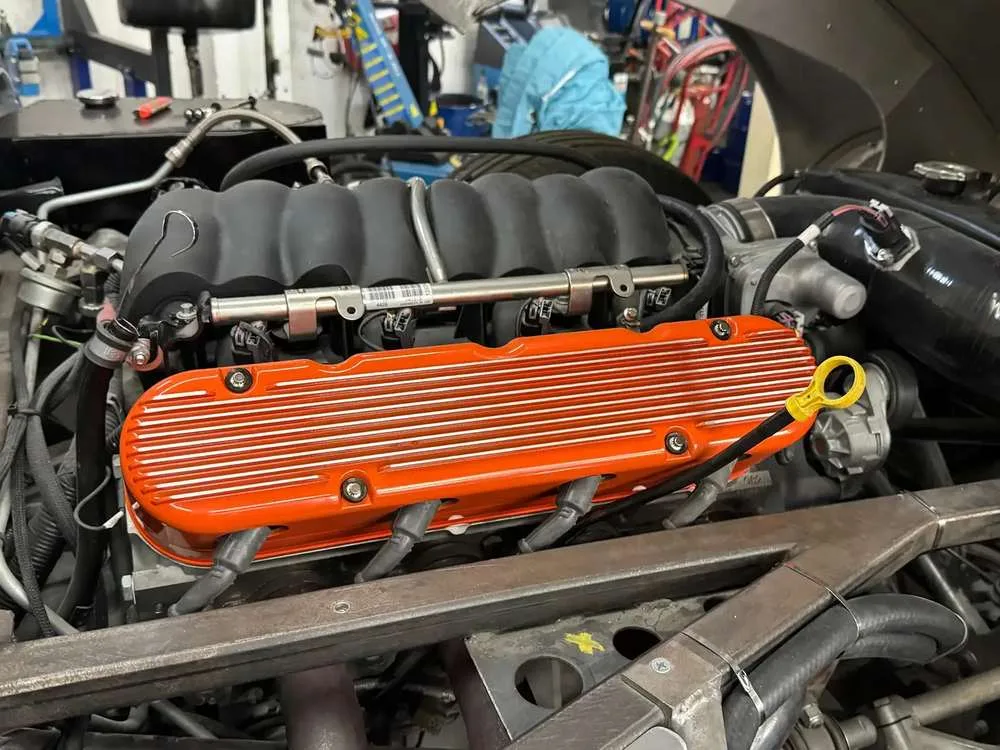
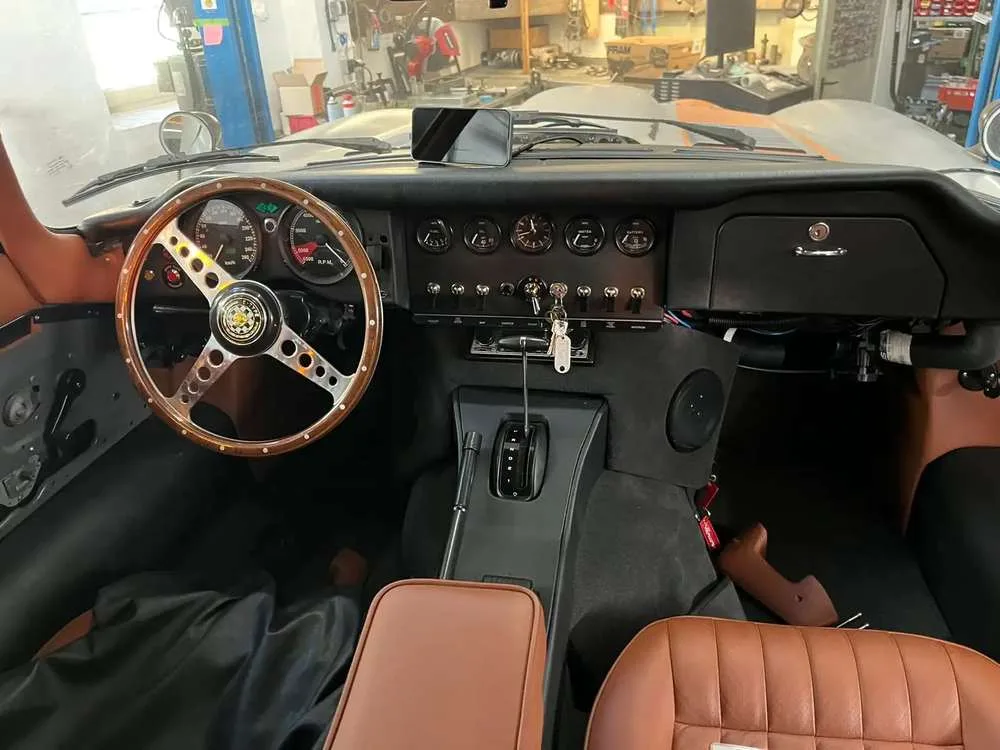
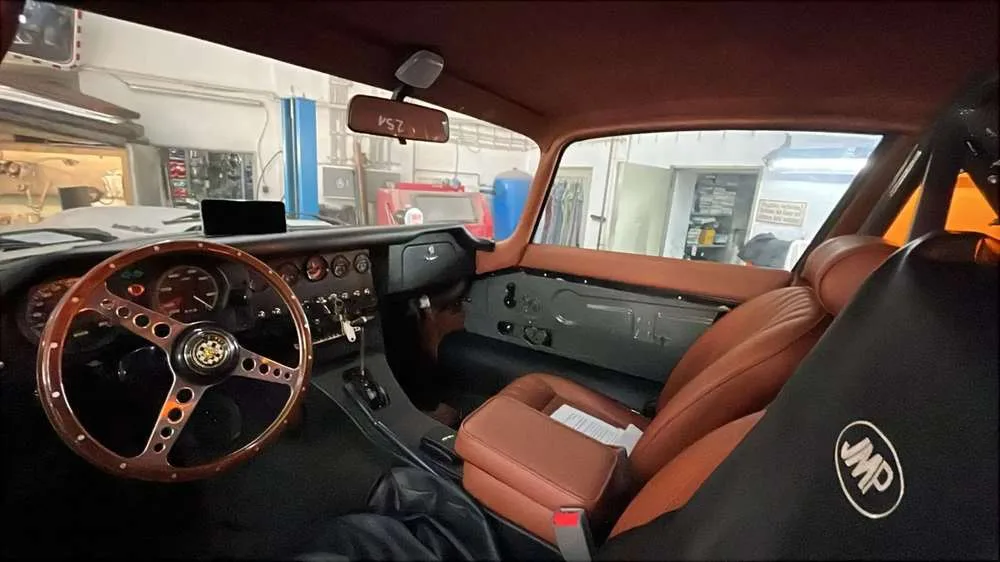
Silver body with a hand-painted twin stripe, a motorsport roll cage, saddle-leather cabin and a V8 built for a client who intends to drive it. Every Borrmann that follows will be built to the same standard — and to a different brief.
Your car begins as your car.
A Borrmann is built on a Series 3 donor — either the E-Type you already own, or one we source and verify for you, chassis provenance first. Coupé or roadster, colour, hide and running gear are then decided together, in the atelier, under real daylight.
A legend worth building on.
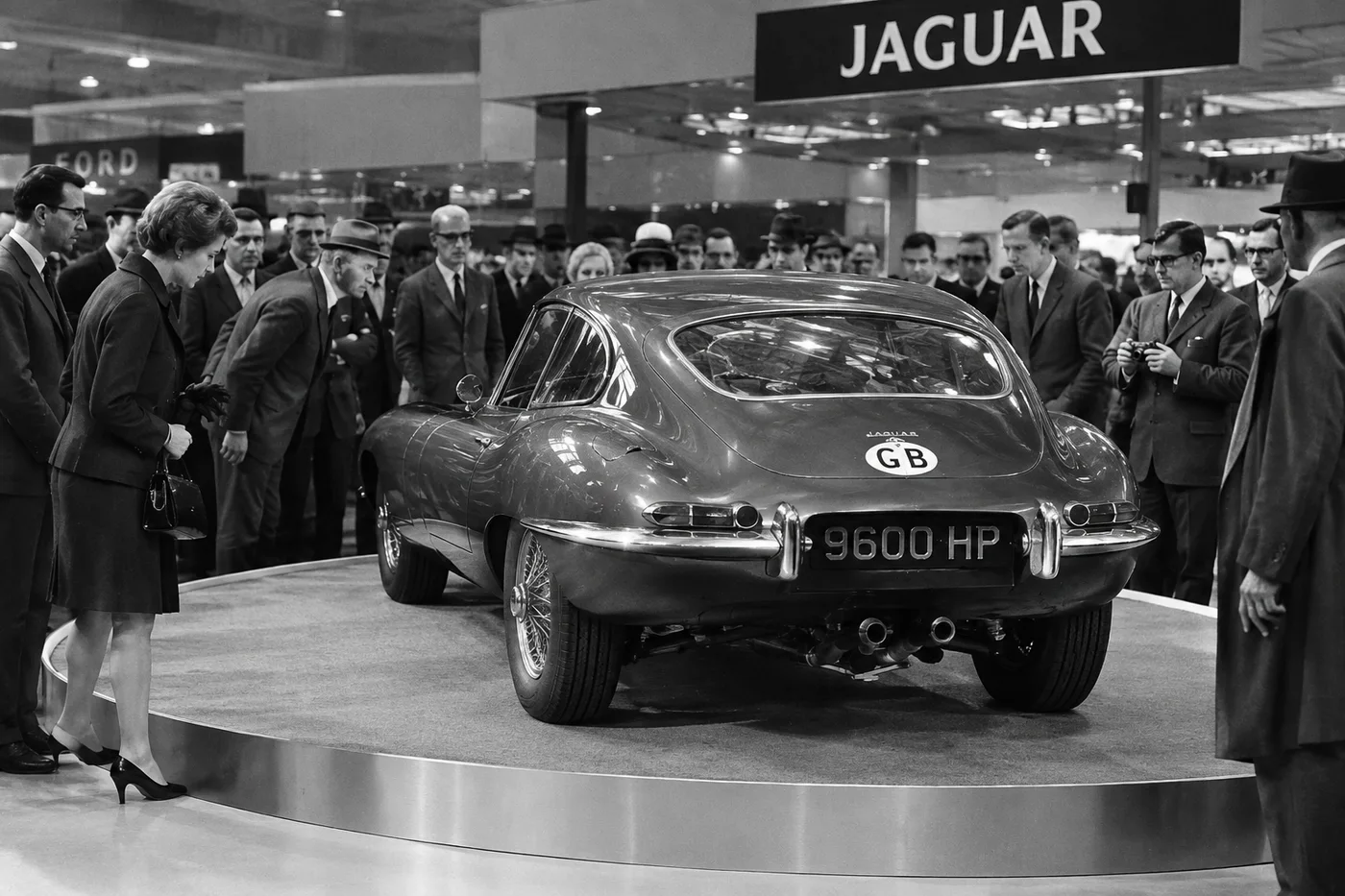
Geneva, 1961
The E-Type was unveiled at the Geneva Motor Show in March 1961, to a reception few road cars have matched since.
The E-Type is held in the permanent design collection of New York's Museum of Modern Art — one of very few cars anywhere to carry that status.
Unexpected success
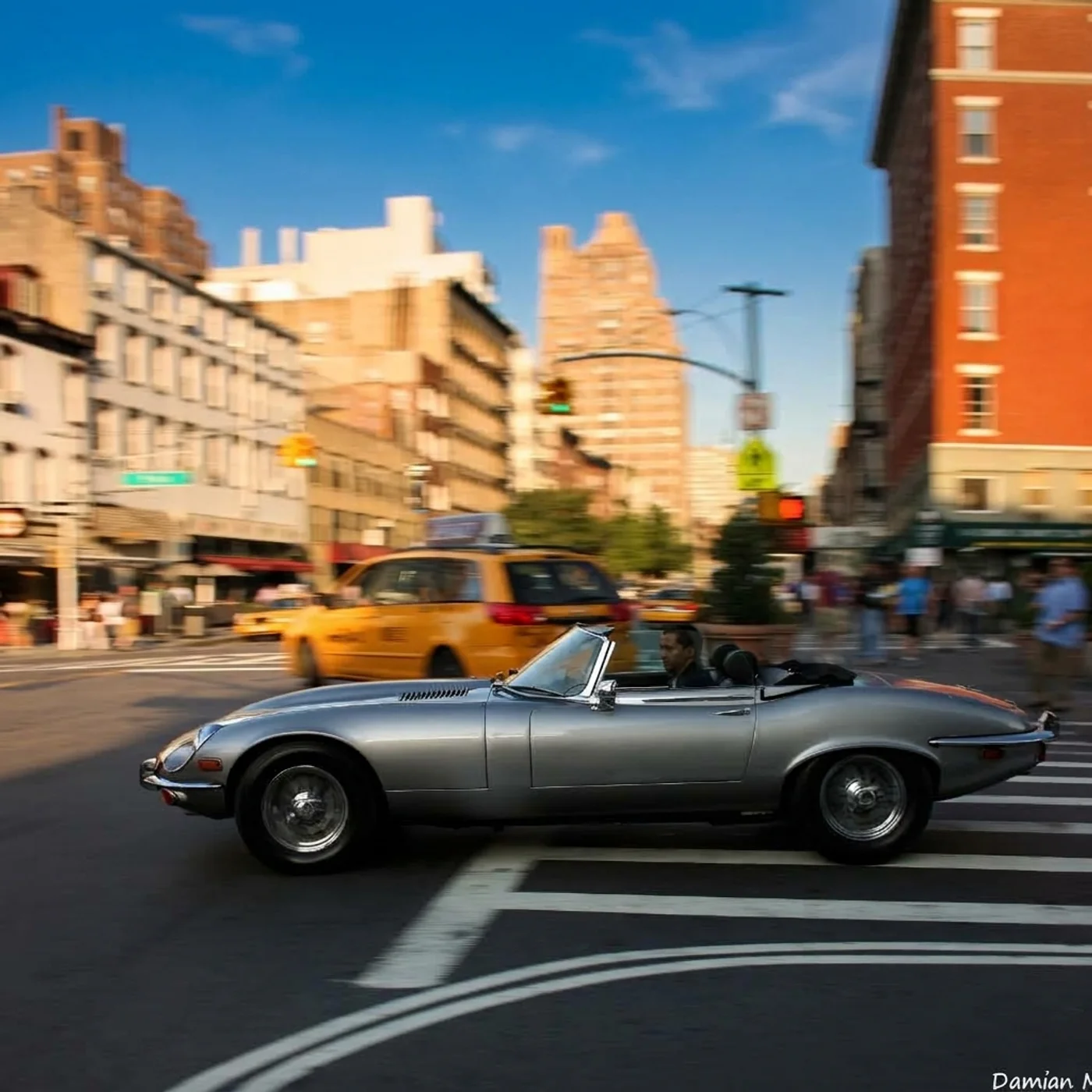
Photo: Damian Morys, licensed CC BY 2.0
Iconic design
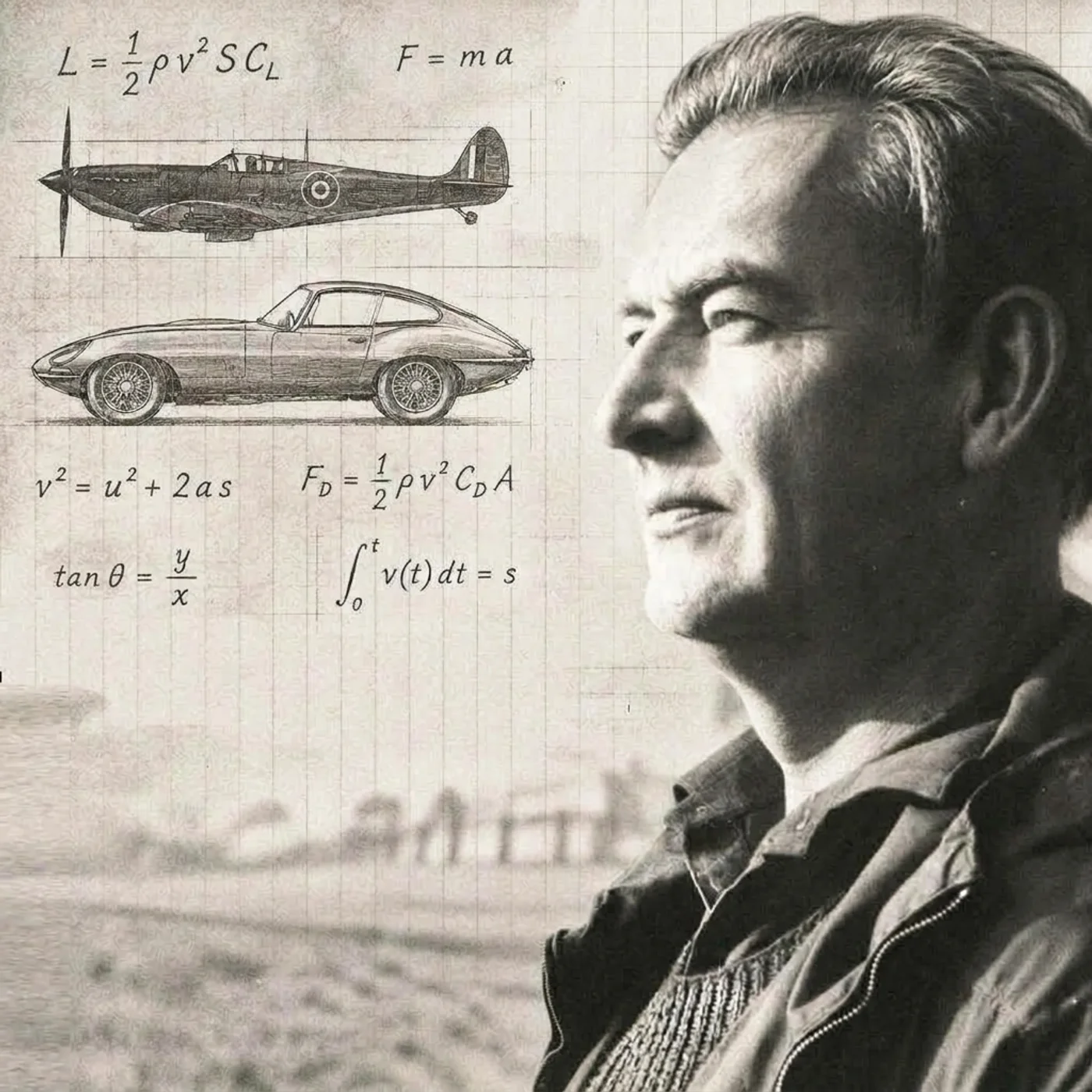
Former aeronautics engineer Malcolm Sayer designed the Jaguar E-Type using mathematical formulas and aerodynamic principles rather than traditional styling sketches.
Sayer used complex mathematical calculations, slide rules and logarithmic tables to map the car's flowing, low-drag shape.
Drawing on his experience at the Bristol Aeroplane Company, he applied aircraft streamlining concepts to reduce wind resistance.
The shape evolved directly from earlier Jaguar racing cars like the C-Type and D-Type, prioritising high-speed stability and performance.
His calculations produced the signature long bonnet and sweeping lines that allowed the car to reach top speeds of 150 mph.
150 mph
Jaguar advertised the car with a top speed of 150 mph — an extraordinary claim for a production car in 1961.
In 1961 the E-Type was a mechanical masterpiece. It brought genuine, race-bred technology to a production sports car at a fraction of the cost of its contemporary rivals.
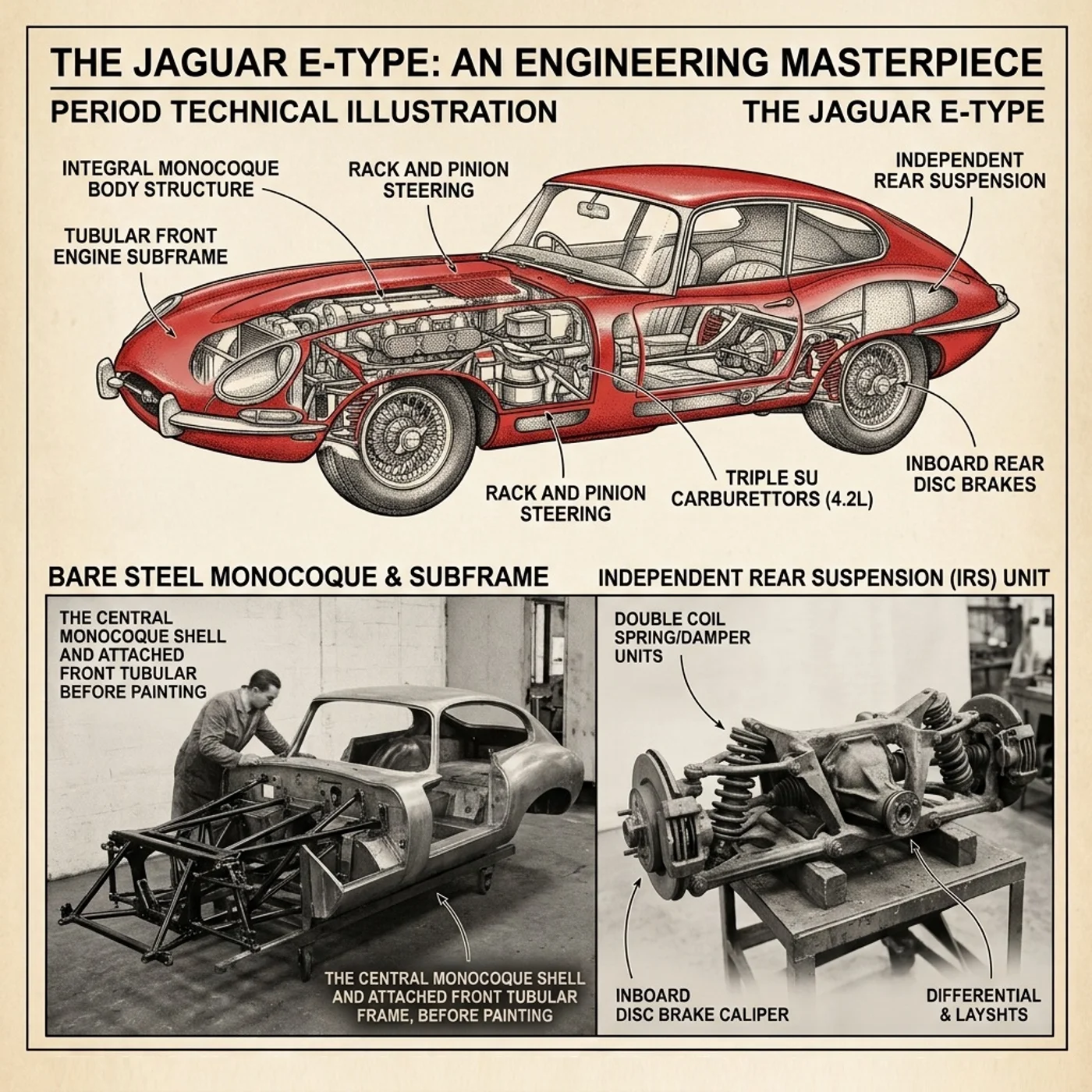
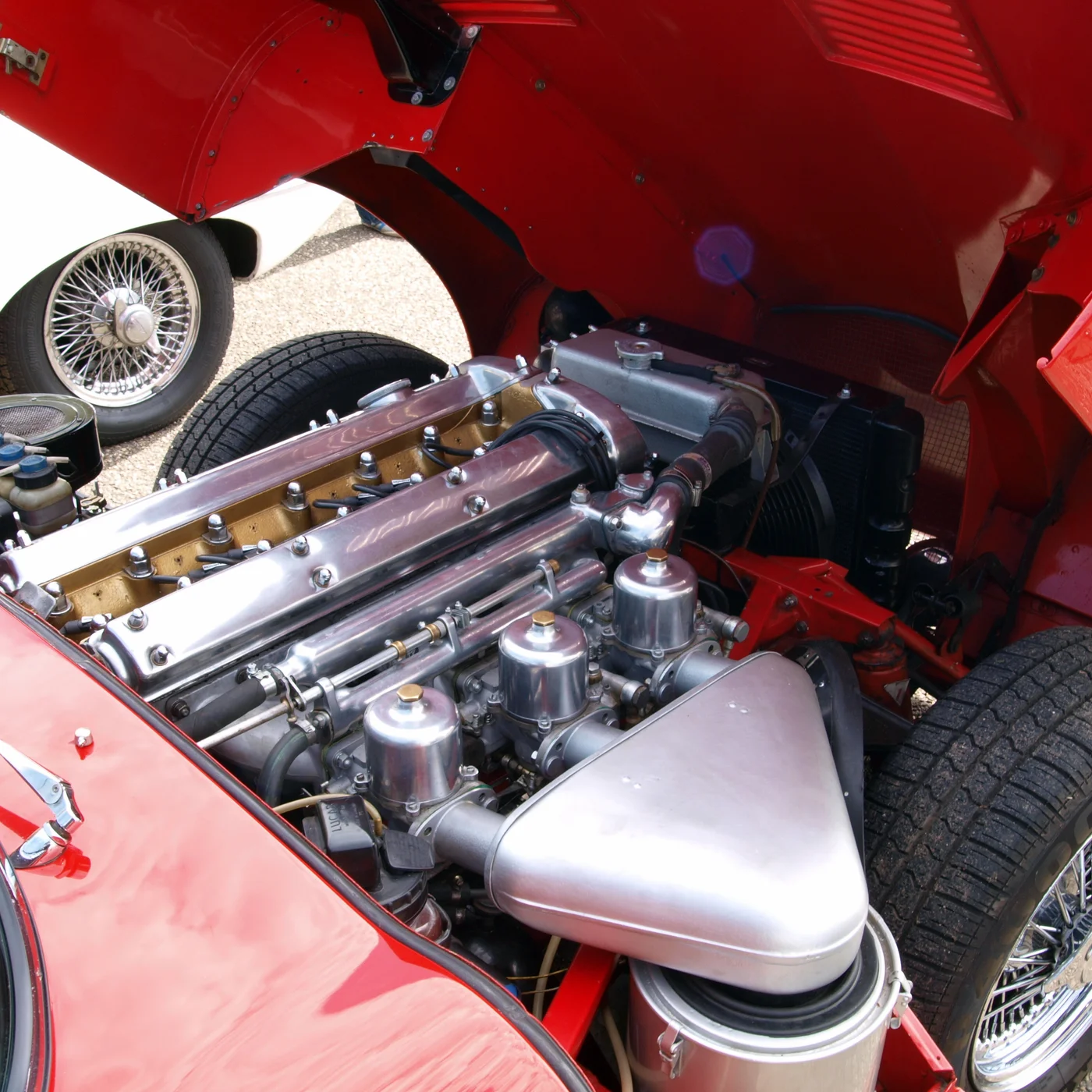
It was powered by the legendary 3.8-litre DOHC inline-six, fed by triple SU HD8 carburettors and generating a claimed 265 horsepower and up to 283 lb-ft of torque.
Technical innovation
Moving away from body-on-frame design, the E-Type used a steel monocoque central tub. The engine and front suspension were bolted to a forward subframe of square-section steel tubing, mirroring the construction of the Le Mans-winning D-Type racing car. The chassis achieved an excellent ~51:49 front-to-rear weight distribution.
The independent rear suspension was a highly advanced layout for 1961: twin coil springs and dampers on each side, with lower wishbones. The design was so effective that Jaguar used variations of it for decades.
Four-wheel power-assisted Dunlop disc brakes were standard. To reduce unsprung weight and improve handling, the rear discs were mounted inboard next to the differential rather than out at the wheels.